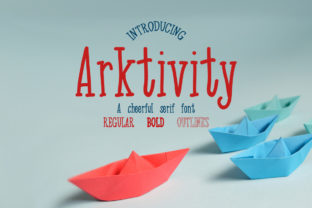
Arkitivity: A Handwritten Serif Font for Creative Workflows
Arkitivity is a handwritten serif font designed to bring a personal, hand-lettered touch to a wide range of design projects. With three distinct styles—regular, bold, and outlined—it offers flexibility for different visual needs. Whether you're working on business cards, invitations, stationery, blogs, or logos, Arkitivity can enhance your creative output with its unique character and style.
This font is ideal for professionals and creators who want to add a human element to their designs. It fits naturally into workflows that require both precision and personality, making it a valuable tool for anyone involved in branding, marketing, or content creation.
Understanding Arkitivity in the Design Process
Arkitivity is more than just a font; it's a tool that supports various stages of the design process. From initial concept to final execution, it can be used to add a personalized flair that sets your work apart. Its handwritten quality makes it particularly effective for projects that aim to convey warmth, authenticity, or individuality.
Before starting a project, designers often look for fonts that match the tone and message they want to communicate. Arkitivity provides a versatile option that can be adapted to different contexts. For example, the regular style might be used for body text in a blog post, while the bold version could be used for headings or titles that need emphasis.
During the design phase, Arkitivity can help maintain consistency across different elements. By using the same font throughout a project, you create a cohesive visual identity that reinforces your brand or message. The outlined style, in particular, can be useful for creating contrast or highlighting key information in a design.
After completing a project, Arkitivity can still play a role in quality control. Ensuring that the font is used correctly and consistently helps maintain the integrity of the design. This is especially important when working with clients or collaborators who expect a professional finish.
Integrating Arkitivity into Your Workflow
One of the strengths of Arkitivity is its compatibility with various design tools and platforms. Whether you're using Adobe Creative Suite, Canva, or other design software, the font can be easily integrated into your workflow. This makes it accessible to both seasoned designers and those who are just starting out.
For professionals who work on multiple projects, Arkitivity can be part of a larger toolkit that includes other fonts, color palettes, and design assets. It complements other serif fonts while offering a distinct alternative that stands out in a crowded design landscape.
When working with a team, Arkitivity can help maintain a consistent visual language across different projects. By sharing the font files and guidelines, team members can ensure that all materials align with the same aesthetic. This is particularly useful in branding efforts where uniformity is key.
For freelancers and small business owners, Arkitivity can streamline the design process by reducing the need to search for the right font for each project. Having a reliable, high-quality font like Arkitivity on hand saves time and ensures that your work maintains a professional appearance.
Practical Tips for Using Arkitivity
To get the most out of Arkitivity, consider the following tips:
- Experiment with styles: Try different versions of the font to see which one works best for your specific project. The outlined style, for instance, can add a decorative element to headlines or logos.
- Pair with complementary fonts: Use Arkitivity alongside other fonts to create visual balance. A sans-serif font might provide contrast, while another serif font could reinforce a traditional feel.
- Test readability: Ensure that the font is legible in different sizes and formats. The regular style is best for body text, while the bold version should be used for headings that need to stand out.
- Use in multiple formats: Apply Arkitivity to both digital and print materials to maintain a consistent look across all platforms.
By incorporating these practices, you can make Arkitivity an integral part of your design process. It’s not just about choosing a font—it’s about using it strategically to enhance your work and meet your creative goals.
Arkitivity and Long-Term Use
When considering long-term use, Arkitivity offers reliability and adaptability. Its clean lines and readable structure make it suitable for both short-term projects and ongoing design needs. This makes it a practical choice for businesses that require consistent branding over time.
For educators and trainers, Arkitivity can be used to create visually engaging materials that support learning activities. Its handwritten style adds a personal touch that can make educational content more relatable and memorable.
In the context of personal goals, such as journaling or creative writing, Arkitivity can help maintain a sense of organization and style. Using it in notes, planners, or digital journals can make the process more enjoyable and visually appealing.
Ultimately, Arkitivity is a versatile tool that can be adapted to a wide range of needs. Whether you're working on a large-scale project or a small personal task, it provides the flexibility and quality needed to produce meaningful results.
Conclusion: Arkitivity as a Creative Asset
Arkitivity is more than just a font—it’s a creative asset that can enhance your design process and elevate your work. Its three styles offer flexibility, and its handwritten quality brings a personal touch that resonates with audiences. By integrating Arkitivity into your workflow, you can achieve greater consistency, efficiency, and visual appeal in your projects.
Whether you're a designer, marketer, educator, or entrepreneur, Arkitivity has the potential to become a valuable part of your creative toolkit. With careful planning and thoughtful implementation, it can help you produce work that stands out and meets your professional goals.